
Teaching, tutoring, and course creation resources
Practical guidance for teachers, tutors, course creators, schools, parents, and students.
Most popular
Based on real article views.

How to Build an SAT Error Log That Changes What Students Practise
A useful SAT error log does more than record wrong answers: it identifies why an answer went wrong, how confident the student felt, when to revisit it, and which question to practise next. This guide gives teachers, tutors, parents, and students a practical structure for turning mistakes into targeted study decisions.

How to Create a Diagnostic Test Before a Course Starts: A Practical Blueprint for Tutors
A strong course-start diagnostic is not a mini mock exam. It is a short, deliberate evidence-gathering tool that helps tutors identify starting points, form flexible groups, and choose first-week work without reducing a learner to one score.

Best AI Tools for Teachers in 2026: Choose the Right Tool for Each Workflow
The best AI tools for teachers are not interchangeable. This workflow-based guide compares practical options for planning, content creation, feedback, differentiation, and administration—while keeping teacher judgement at the centre.

Write a tutor bio that proves fit without vague claims
A strong tutor bio makes it easier for suitable students and parents to understand what you teach, how you teach, and whether your support fits their goals. Use a clear structure, specific proof, and an honest teaching approach to create a profile that attracts better-fit enquiries.
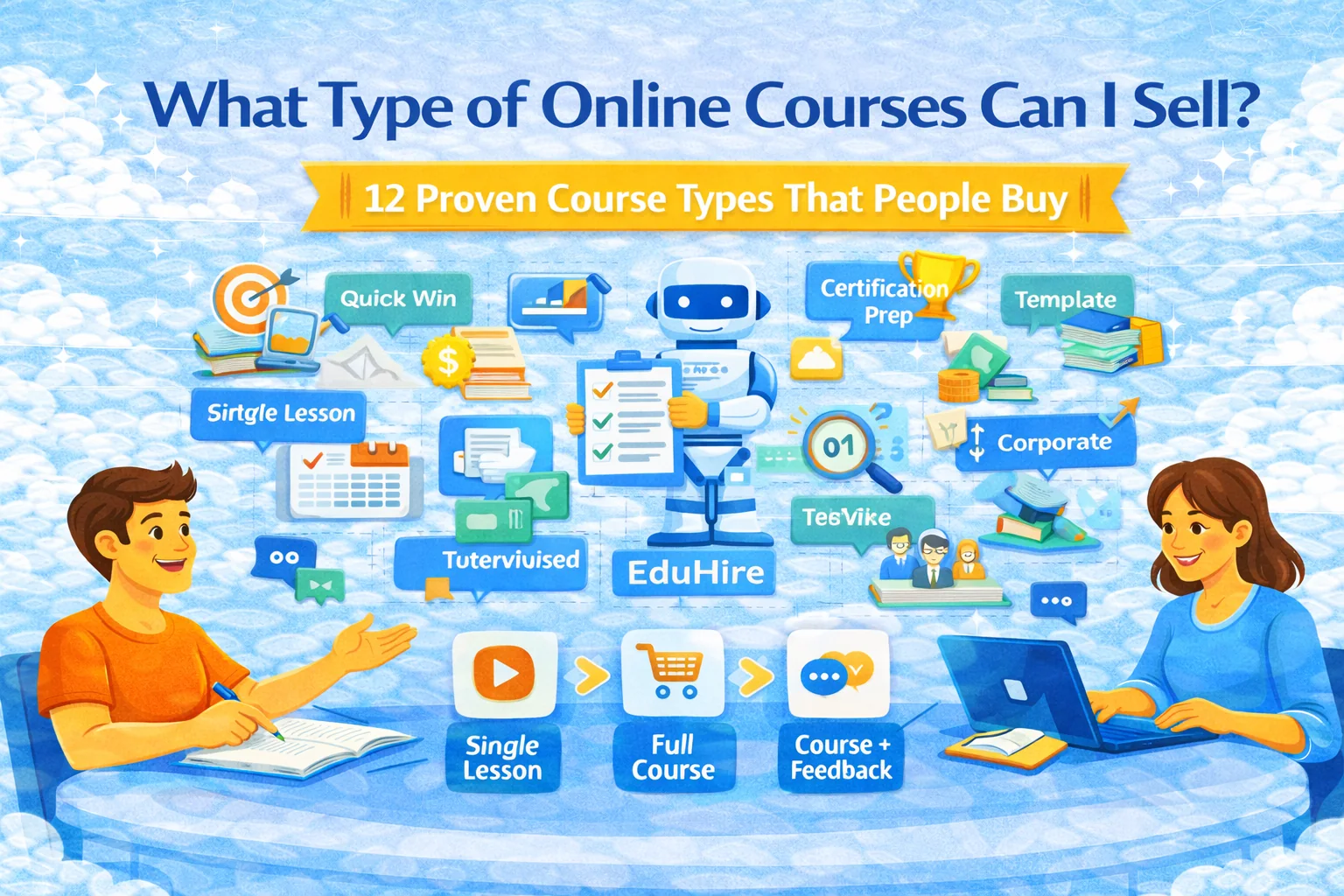
12 types of online courses you can sell—and how to choose yours
Not sure what kind of online course to sell? Here are 12 course types that reliably convert—plus a quick framework to choose the right niche, validate demand, price it, and sell it on SubSchool as a full course or even single lessons.

Evaluate AI grading by evidence, rubrics, uncertainty, privacy, and teacher control
AI grading tools can reduce repetitive marking work, but the right choice depends on more than speed. Use this framework to compare response formats, rubrics, evidence, uncertainty, privacy, and teacher override before adopting a tool.

Best AI Course Creators: Turn a Generated Outline into a Real Learning Workflow
The best AI course creator is not simply the one that writes the fastest first draft. Compare how each platform structures content, supports editing and assessment, delivers learning through an LMS, and prices the workflow before choosing.

Tutoring Session Notes Template: Record What Moves Learning Forward
A practical tutoring session notes template should capture the learning outcome, misconceptions, evidence, next task, and a parent-ready summary. This guide shows independent tutors what to record, what to leave out, and how to turn brief notes into better follow-up teaching.
How Teachers Should Promote Their Social Media in 2026 (Without Feeling Like a Cringey Influencer)
With the continued growth of social media and the increasing importance of technology in education, promoting oneself as a teacher on social media is becoming increasingly important

How to Write a Student Progress Report Parents Can Actually Use
A useful student progress report turns tutoring evidence into a clear shared plan: what changed, what is getting in the way, what parents can do, and what comes next. Use this practical structure to write reports that inform without overwhelming families.
All articles

Student Progress Reports That Lead to the Next Instructional Action
A useful student progress report does more than display scores: it helps teachers, tutors, families, and learners decide what to do next. Use a short evidence-to-action structure to turn assessment information into focused teaching, practice, feedback, and review.

How Much Teacher Time Can Homework Automation Actually Save?
Homework automation can reduce repetitive review and feedback work, but the realistic saving depends on the task, class volume, setup time, and how often a teacher reviews the output. Use this practical calculator framework to build a local estimate rather than relying on a headline number.

Detect Learning Gaps Without Turning Assessment Into Surveillance
A practical approach to learning gap assessment built on frequent, low-stakes evidence rather than invasive monitoring. Use short checks, purposeful feedback, and teacher judgement to decide what learners need next.

How to Improve Grading Consistency Across Multiple Teachers
Grading consistency is built through a shared interpretation of quality—not simply by giving every teacher the same rubric. Use clear criteria, annotated examples, calibration, moderation, and a practical disagreement-review process to make assessment decisions more comparable across teachers.

Assessment in the Age of AI: Design for Process, Explanation and Judgement
Generative AI changes what a finished assignment can prove—but it does not remove the need for meaningful assessment. Design tasks that make students’ process, reasoning, revision and responsible AI use visible.

Can AI Grades Be Valid? The Questions Schools Should Ask First
AI grading validity is not established by a product demonstration or an accuracy claim alone. Schools need evidence of agreement, calibration, subgroup fairness, appropriate consequences, and a practical appeal route before using AI-supported scores in decisions about learners.

Formative vs Summative Assessment: How to Use Both in an Online Course
Formative and summative assessment serve different purposes, but an online course needs both. The key is attaching a clear next action to every meaningful result—for the learner, the teacher, or both.

How to Get Tutor Referrals Without Asking Awkwardly
A tutor referral program works best when it makes it easy for satisfied families to help someone they already know. Use well-timed prompts, simple scripts, proportionate rewards, and clear boundaries to build trust rather than pressure.

How Tutors Can Earn Between Live Sessions With Course Content
Turn the teaching materials you already create into focused products that can be sold between appointments. Explore single lessons, mini-courses, practice packs, and feedback offers without treating content income as fully passive.