Social media in 2026 is basically two things at once:
- the new “word of mouth” for parents and students, and
- a trust engine for adults who want to learn skills (languages, math, coding, music, etc.).
If you teach online (or want to), a good social presence is no longer “nice to have”. It’s the fastest way to prove you’re real, competent, and worth paying.
Below is a practical playbook: what to post, where, how to turn attention into students, and what to track.
Why teacher marketing changed (and what still works)
What’s different in 2026
- Short-form video is default discovery (Reels/Shorts/TikTok).
- Trust matters more than polish: slightly imperfect teaching clips outperform “corporate” videos.
- Algorithms reward retention + saves + shares, not follower count.
- People buy when they feel: “This teacher gets me and can actually explain.”
What’s timeless
- Clear niche + clear outcomes + consistent proof.
- Strong positioning (who you help, with what, and what result).
- A simple funnel from “content” → “lesson/course” → “paid”.
Step 1: Pick a niche that actually sells
The biggest mistake: trying to teach “everyone”.
Pick one main audience and one main transformation.
Good niche examples
- “Math for SAT beginners who hate math”
- “Spoken English for busy adults (15 min/day)”
- “Piano for absolute beginners (no sheet music)”
- “Chemistry exam prep: from 40% to 80%”
Simple positioning formula
I help [who] achieve [result] in [timeframe or method].
Put that in your bio everywhere.
Step 2: Choose platforms (don’t try to win them all)
Pick one primary + one secondary.
Best combos for teachers
- TikTok / Instagram Reels → discovery
- YouTube Shorts → discovery + long-term search
- LinkedIn → adult learners + corporate training + credibility
- Facebook Groups → parents + local demand (still underrated)
Rule: If you can only do one, do Shorts/Reels/TikTok. It’s the cheapest reach.
Step 3: Fix your profile so it converts
Your profile has one job: make a stranger think:
“Okay, I know what you teach and how to start.”
Bio checklist
- Who you teach
- What outcome
- Proof (years, results, method, certifications—anything real)
- Clear CTA: “Start here → …”
CTA options that work
- “Take the free placement quiz”
- “Join the next live lesson”
- “Start with lesson 1”
- “Get my free study plan”
If you host courses, the CTA can point to your course landing page on SubSchool (cleaner than sending people into DMs forever).
Step 4: Post the right content (3 pillars that always win)
Pillar A — “Proof I can teach”
- 30–60 sec explanation of one concept
- “Common mistake + quick fix”
- “How to think about X in 20 seconds”
- “1 trick that saves you 30 minutes”
Example hook
- “If you confuse past simple and present perfect, watch this.”
Pillar B — “Proof I understand the learner”
- struggle-based posts: attention, motivation, fear of exams
- “Why you’re stuck (and what to do today)”
- “How to study when you’re tired and have work”
Pillar C — “Proof you’re legit”
- student wins (even small wins)
- testimonials (text overlay is fine)
- behind-the-scenes lesson planning
- snippets of real teaching (blur names if needed)
Content ratio (easy mode)
- 60% teaching snippets
- 30% motivation/strategy
- 10% personal trust + behind-the-scenes
Step 5: Turn content into students (a funnel that doesn’t suck)
Most teachers do: post → hope → sadness.
Instead:
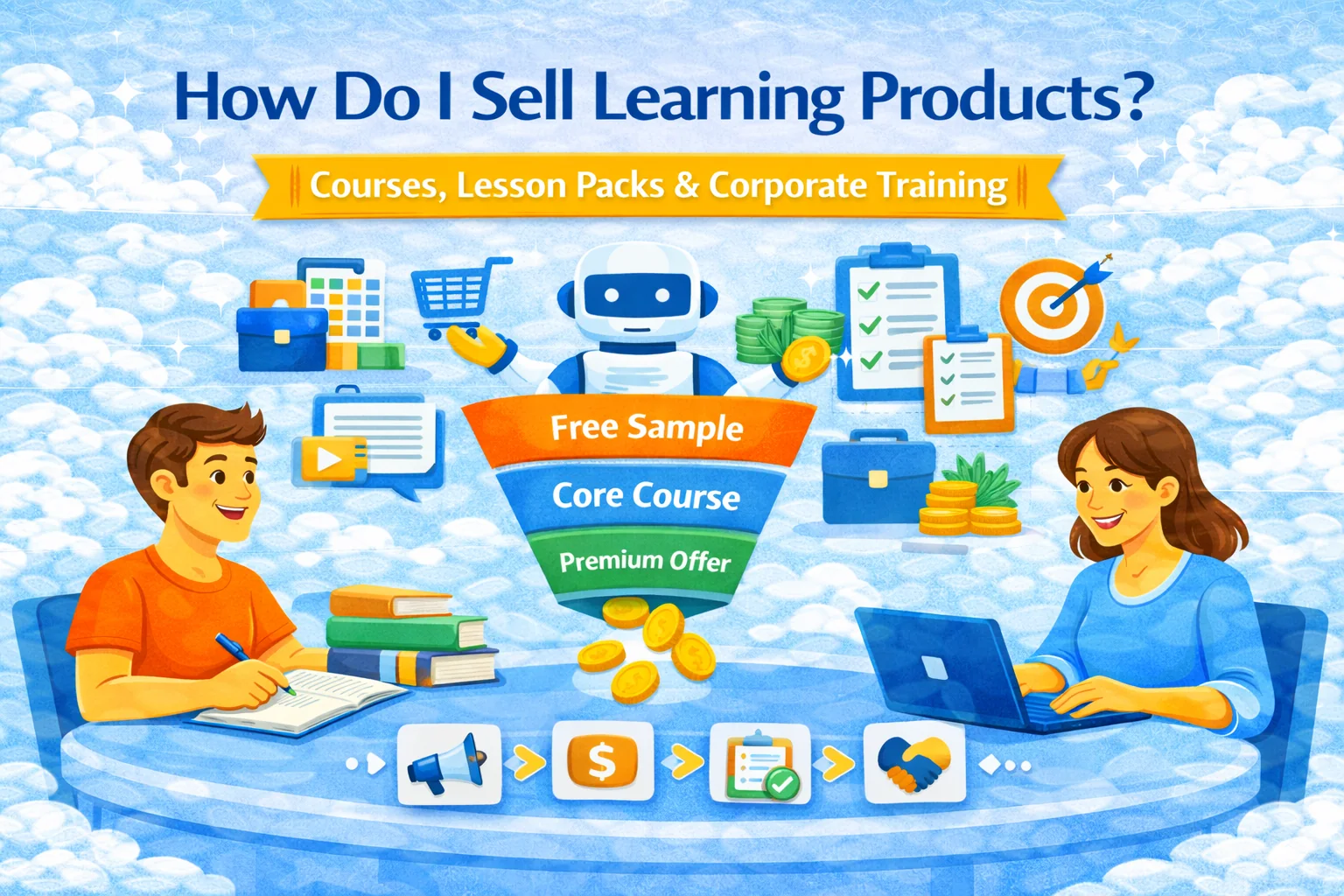
The simple funnel
- Short video (discovery)
- Free starter (placement quiz / mini-lesson / checklist)
- Paid entry offer (trial lesson OR “Lesson 1” paid)
- Full course / subscription / package
A big advantage of SubSchool is you can structure this neatly:
- sell a full course
- or let students buy a single lesson to try first
- and (if you’re preparing for exams) use exam/assessment formats to show progress clearly
Step 6: Make your content easier to produce (templates)
Here are formats you can reuse forever:
1) “Mistake → Fix”
- Mistake learners make
- Why it happens
- One corrective rule
- One example
2) “Mini-lesson”
- Concept
- 1 visual
- 1 exercise
- “Comment ‘PLAN’ and I’ll send the practice” (or link in bio)
3) “Exam prep”
- One typical question
- How to approach it
- What graders look for
4) “Study routine”
- a 10–15 min daily plan
- what to do if you’re behind
- what to stop doing (this one goes viral more often than it should)
Step 7: Hashtags and keywords (SEO inside social platforms)
Hashtags are not magic, but they help classification.
Use:
- 2–3 broad: #math #englishlearning
- 3–5 niche: #satmath #ieltswriting #algebratips
- 1–2 local (optional): #londonteacher #nyctutor
Also: say your keywords out loud in the video and write them in captions.
Platforms do speech-to-text and topic detection.
Step 8: Collaboration that actually brings students
Skip “follow-for-follow”. Do this instead:
- Duets/stitches with other teachers (“Here’s how I teach the same topic differently”)
- Guest live lesson swap
- Joint mini-challenge (7 days, one concept/day)
- Partner with parent communities or local groups
Collabs work best when both audiences have the same “pain”.
Step 9: Metrics that matter (ignore vanity)
Track weekly:
- Profile visits → link clicks
- Saves per 1,000 views (quality signal)
- DMs / comments asking for help
- Trials / paid lesson 1 purchases
- Course conversion rate (view → buy)
Followers are nice. Rent is paid by conversion.
Step 10: A realistic 30-day plan (so you don’t burn out)
Week 1: Setup + 10 short videos
- Fix bio + CTA
- Record 10 “Mistake → Fix” clips
Week 2: Consistency
- Post 4–5 clips
- 1 live session (even 20 minutes)
Week 3: Proof + offer
- 2 student stories / results
- Launch a paid entry point (trial lesson or lesson 1)
Week 4: Scale what works
- Double down on the best-performing format
- Turn top video into: Reel + Short + TikTok + LinkedIn post
Common mistakes (so you don’t waste months)
- Posting “motivational quotes” instead of teaching proof.
- No clear CTA (“DM me” is not a funnel).
- Talking about yourself more than the learner’s problem.
- Over-editing videos until you never post.
- Trying to create “a brand” before you have demand.
Final note (the uncomfortable truth)
If someone asked me to recommend a teacher online, I’d recommend the one who:
- explains clearly in public,
- shows real learning outcomes,
- and has a simple next step (try lesson 1 / take quiz / start course).
Everything above is designed to create exactly that.