
Key takeaways
- Use the January 2026 TOEFL iBT format, including adaptive Reading and Listening and updated Writing and Speaking tasks. Current scores use a 1–6 scale; a comparable overall 0–120 score is also reported during the transition.
- Use answer evidence for receptive tasks and criterion-based revision or feedback for written and spoken tasks.
- Use a fresh task or response for verification; remembering a reviewed answer is not enough.
- The five examples are fictional and do not reproduce official exam questions.
Start with the January 2026 TOEFL iBT format
TOEFL iBT changed on January 21, 2026. A current log needs the updated task names rather than a copied checklist of older integrated or independent tasks. Reading and Listening use a multistage adaptive approach. Writing includes Build a Sentence, Write an Email and Write for an Academic Discussion. Speaking includes Listen and Repeat and Take an Interview. Record the date and format of your practice so an older resource does not silently become a description of the current test.
Current score reporting uses a 1–6 scale in half-point steps. During the transition, score reports also include a comparable overall 0–120 score. An error log does not convert mistake counts into either scale. Use official ETS information for current scoring and practice, and describe only the evidence your own attempt supplies.
Use different evidence for receptive and productive tasks
Reading and Listening rows can record the selected answer, explanation and language or comprehension cue that you missed. Name the exact task type when known. For a short listening response, matching a repeated word may overlook what the speaker is trying to do. For a word-completion task, familiarity with spelling may not establish the meaning and grammatical role required by the sentence.
Writing and Speaking need response evidence instead of a pretend answer key. Save a short excerpt or recording timestamp and identify what you will change. An email may be grammatical yet fail to perform a requested action. A repeated sentence may omit an ending that changes meaning. An interview response can need clearer development or more intelligible delivery. Use official task guidance and qualified feedback where your self-assessment is uncertain.
Make practice match the updated task
For Build a Sentence, explain the subject, verb and clause relationships before rearranging elements. For Write an Email, map recipient, purpose and required information before drafting. For Write for an Academic Discussion, check whether your contribution responds to the actual discussion and develops its point. Do not import a retired task's checklist as if it were an official requirement for these new tasks.
In Speaking, listen back to your own recording. Compare Listen and Repeat attempts with the model to identify omissions and changes, and use a new utterance for the next check. For Take an Interview, organize a direct response with supporting detail and review clarity. Treat an AI suggestion as a revision aid, not an official rating or a substitute for reliable teacher feedback.
Five fictional TOEFL iBT log entries
The examples below use current task names and are original learning scenarios, not ETS test content or rated performances. They sample five task types rather than claiming to cover every task in the test. Your log can add rows for the other Reading and Listening tasks, Academic Discussion or Take an Interview using the same evidence-based method. Keep verification open until you collect a fresh answer, revised text or new recording.
| Skill/task | Observed problem | Cause | Correction | Next practice | Later verification |
|---|---|---|---|---|---|
| Reading: Complete the Words | Completed a word without checking the sentence's grammatical role. | Used spelling recognition but missed context. | Identify the required meaning and word form before completing it. | Complete a few new context-based gaps. | Explain meaning and grammar on a later gap. |
| Listening: Listen and Choose a Response | Selected a reply that matched vocabulary but not speaker intent. | Focused on a repeated word rather than the communicative purpose. | Identify what the speaker is doing and what reply fits that purpose. | Compare appropriate replies to new short utterances. | Explain intent for a later listening prompt. |
| Writing: Build a Sentence | Placed a clause in an order that changed the intended relationship. | Did not identify the sentence's subject, verb and clause roles. | Build the main clause, then connect the remaining elements. | Arrange several new sentences and explain their structure. | Check a later sentence for grammar and intended meaning. |
| Writing: Write an Email | Omitted a requested action although the language was clear. | Did not map every requirement before composing. | List recipient, purpose and required details before drafting. | Revise one practice email against its actual prompt. | Check a new email for task completion and clarity. |
| Speaking: Listen and Repeat | Dropped an ending and changed part of the sentence meaning. | Lost a phrase boundary while trying to repeat quickly. | Compare a recording with the model and mark omitted sounds. | Repeat a few new short utterances with clear phrase grouping. | Listen back to a new recording for accuracy and intelligibility. |
Review a language cause, not a made-up score
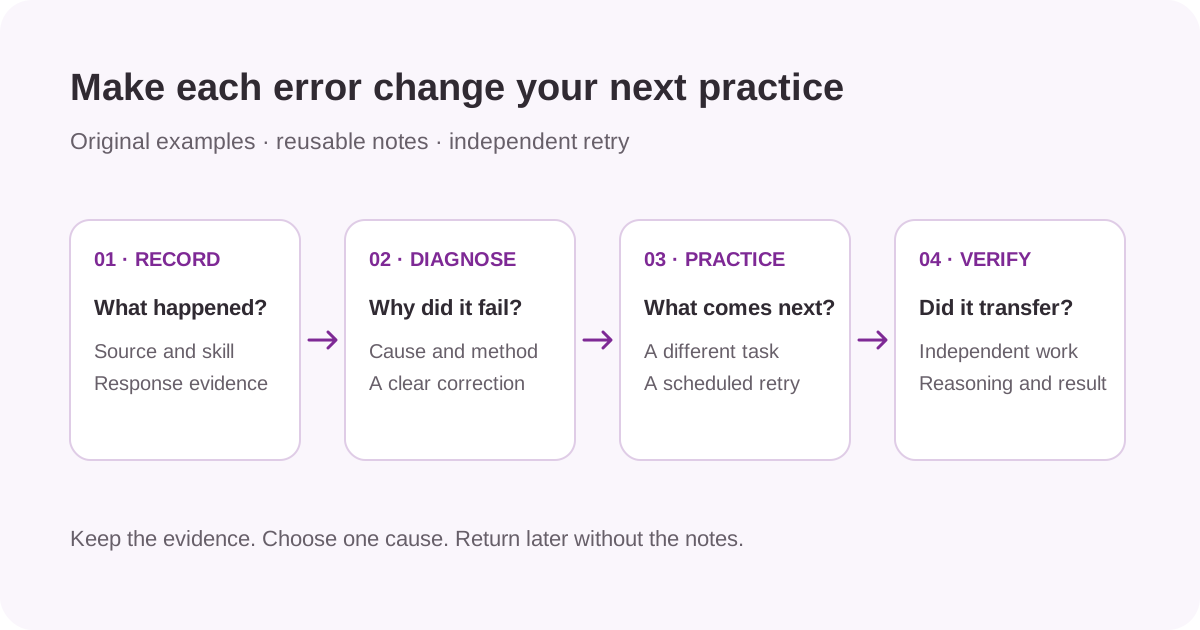
Each week, group rows by the cause you can practice: context and word form, speaker intent, clause structure, task completion or spoken accuracy. Select one pattern and explain a correction without looking at the old answer. Complete a small new task, then return later for another response or recording. Note whether you needed a model, hints or feedback. Use official updated practice and report displays for test information. This editorial routine makes no score guarantee and does not establish the best spacing interval for every language learner.
Official resources and the next step
Check current format details with TOEFL iBT current content. Use the other official sources listed with this guide for legitimate practice and criteria. Access conditions may vary, and some preparation products require payment or an account. This independent guide is not endorsed by the exam owner.
Start with the TOEFL iBT error log template. Fill one row from your own attempt, choose one concrete correction and schedule a fresh verification. Keep personal identifiers and complete copyrighted questions out of shared copies. Your log should make the next learning decision clearer, not promise an outcome.
Sources and methodology
AI-assisted original English editorial draft prepared in Codex on 2026-10-05. Official exam-provider pages were checked for current format and preparation guidance. The examples are fictional original learning scenarios, not copied test questions or official scored responses. The weekly review loop is a practical editorial suggestion, not a claim that a particular cadence is optimal. This guide offers no score, passing, scholarship or admissions guarantee. Human editorial review was approved by Maksim Mamchur on 2026-10-05.


