
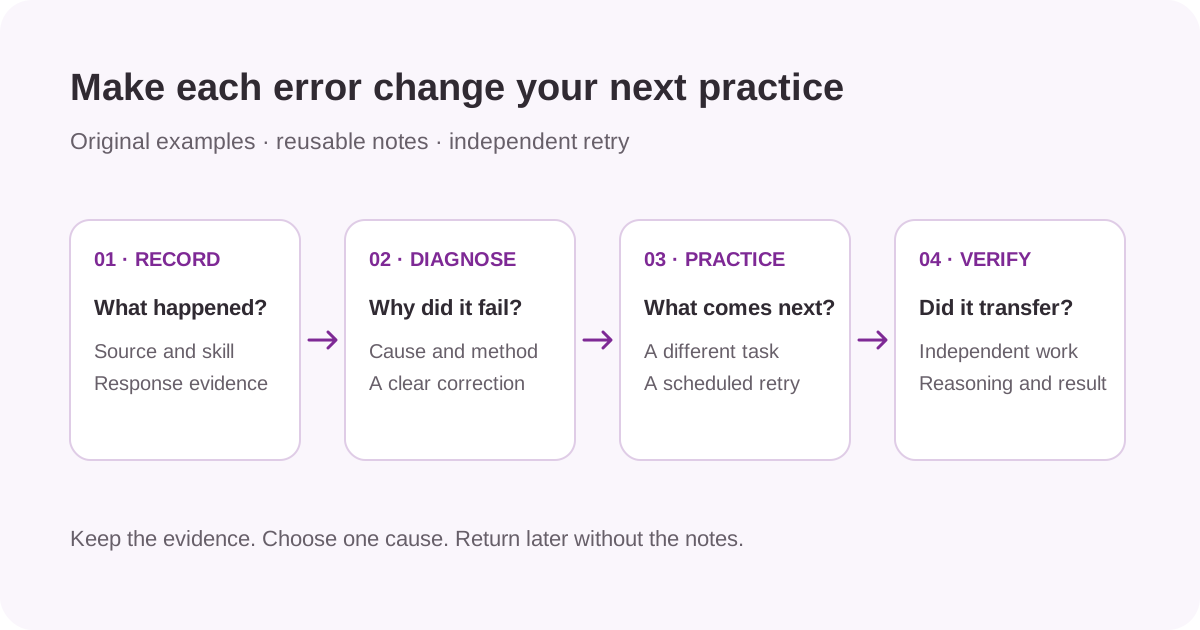
Key takeaways
- These examples are for IELTS Academic. Academic Reading and Writing differ from General Training. An error count in this log is not a band score or an admissions prediction.
- Separate comprehension and instruction mistakes from a writing or speaking criterion that needs deliberate revision.
- Use a fresh task or response for verification; remembering a reviewed answer is not enough.
- The five examples are fictional and do not reproduce official exam questions.
Keep the IELTS Academic scope explicit
An IELTS Academic error log should name Listening, Academic Reading, Writing or Speaking before diagnosing a problem. Academic Reading and Writing differ from General Training, so a generic “IELTS mistake” label can hide a mismatch in the task you practiced. Use the actual official sample, prompt or other legitimate source reference. Check current delivery and policy information separately; this log does not describe every testing arrangement.
Listening and Reading answers can be checked against the relevant answer guidance. Writing and Speaking require assessment criteria and response evidence. Do not transform a count of log entries into a band score. A row records a learning problem, while an official score depends on the assessment and its scoring process. Include uncertain correct answers or responses that needed substantial help.
Separate comprehension, instructions and criteria
A Listening answer may capture the meaning yet violate a word limit or spelling requirement. Record the instruction you missed and the submission check you will use next time. For Reading, distinguish a claim contradicted by the text from one the text does not establish. “False” and “Not Given” reflect different evidence decisions; familiarity with the topic does not supply missing passage evidence.
Writing feedback should identify the criterion it concerns. Task 1 may need an overview of important patterns rather than an inventory of values. Task 2 may omit part of the prompt despite fluent language. Coherence, vocabulary and grammar can raise different revision tasks. In Speaking, fluency and coherence, vocabulary, grammar and pronunciation require evidence from your response or recording rather than a single vague label.
Write one revision you can test
Choose a correction tied to the observed cause. For a completion task, check the word limit and grammatical fit before submission. For a Reading distinction, point to an actual contradiction or explain the missing information. For Task 1, identify major trends before selecting supporting details. For Task 2, map every prompt requirement to a planned part of the answer.
For Speaking, record a fresh response and listen for the specific problem you identified. A simple progression of point, example and explanation can give you something concrete to evaluate when ideas repeat. Do not mistake an AI-generated band estimate for an official assessment. Teacher feedback can help calibrate judgments, particularly when a response involves several overlapping criteria. Your next practice should produce new evidence, not merely repeat a polished model.
Five fictional IELTS Academic log entries
These original examples are not official IELTS questions, examiner comments or rated performances. They show why receptive-answer checks and productive-task criteria need different entries. Adapt the row to your actual task and preserve a small excerpt or recording timestamp. The verification column describes a future check; it does not claim that one revision has permanently removed the problem or raised a band score.
| Skill/task | Observed problem | Cause | Correction | Next practice | Later verification |
|---|---|---|---|---|---|
| Listening: completion instructions | Wrote an answer beyond the stated word limit. | Focused on meaning but did not audit the response instructions. | Check word limit, spelling and grammar before submitting. | Complete a few new answers under explicit instructions. | Verify a later answer against all format requirements. |
| Academic Reading: False versus Not Given | Marked a missing claim as contradicted. | Treated lack of evidence as evidence of the opposite. | Look for actual contradiction; otherwise identify missing information. | Compare supported, contradicted and unstated claims. | Cite the relevant text or explain the absence on a fresh item. |
| Academic Writing Task 1: overview | Listed individual values without describing the main patterns. | Confused detail reporting with an overview. | Identify major trends or comparisons before selecting details. | Revise an overview for a new chart or diagram. | Check a fresh response for a clear overall picture. |
| Writing Task 2: task response | Developed one part of a two-part prompt and omitted the other. | Started writing before checking all parts of the task. | Map each requirement to a planned argument and supporting detail. | Create two outlines for different prompts. | Audit a new response against every prompt requirement. |
| Speaking: fluency and coherence | Repeated an idea while searching for the next point. | Had no clear progression beyond the first sentence. | Use a simple sequence of point, example and explanation. | Record a new short response and mark unnecessary repetition. | Review a later recording for progression and intelligibility. |
Use a weekly criterion-based review
Group rows into instruction checks, passage-evidence decisions and Writing or Speaking criteria. Choose one recurring cause, explain its correction from memory and attempt a new sample task or response. Return later to an unfamiliar prompt and record the evidence for your judgment. Note assistance and unresolved uncertainty. Keep separate records when you practice General Training. Consult official IELTS samples and scoring guidance for current information. The suggested weekly loop is an editorial planning aid, not an optimal-spacing claim, a guaranteed score increase or an admissions prediction.
Official resources and the next step
Check current format details with IELTS Academic test. Use the other official sources listed with this guide for legitimate practice and criteria. Access conditions may vary, and some preparation products require payment or an account. This independent guide is not endorsed by the exam owner.
Start with the IELTS Academic error log template. Fill one row from your own attempt, choose one concrete correction and schedule a fresh verification. Keep personal identifiers and complete copyrighted questions out of shared copies. Your log should make the next learning decision clearer, not promise an outcome.
Sources and methodology
AI-assisted original English editorial draft prepared in Codex on 2026-10-05. Official exam-provider pages were checked for current format and preparation guidance. The examples are fictional original learning scenarios, not copied test questions or official scored responses. The weekly review loop is a practical editorial suggestion, not a claim that a particular cadence is optimal. This guide offers no score, passing, scholarship or admissions guarantee. Human editorial review was approved by Maksim Mamchur on 2026-10-05.


