
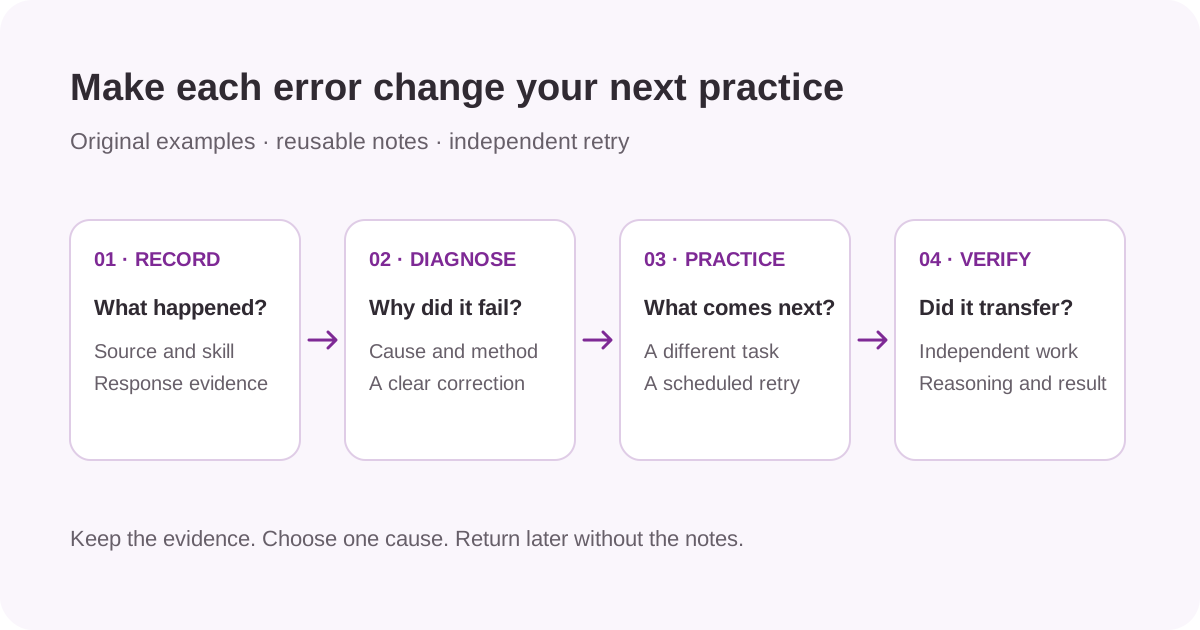
Key takeaways
- This log covers the current GMAT Exam. Do not use legacy Sentence Correction, Analytical Writing or Integrated Reasoning section labels as current sections.
- Distinguish a calculation gap from an unsupported assumption or a misread data condition.
- Use a fresh task or response for verification; remembering a reviewed answer is not enough.
- The five examples are fictional and do not reproduce official exam questions.
Match the log to the current GMAT Exam
The current GMAT Exam has Quantitative Reasoning, Verbal Reasoning and Data Insights. A current error log should use these section labels and the actual question types in your practice. Legacy Sentence Correction, Analytical Writing and Integrated Reasoning materials should not be presented as current sections. If you deliberately use older material to practice a related skill, label its origin so you do not confuse it with a current-format rehearsal.
The useful unit is a decision: what did you assume, calculate, compare or overlook? A wrong answer alone cannot tell you whether you need more mathematics knowledge, a stronger argument map or a better data-reading process. Include uncertain correct answers when you cannot explain your method. They can reveal gaps that a favorable practice total hides.
Record the evidence required by each section
In Quantitative Reasoning, preserve the relationship and constraints behind your setup, plus units when they matter. In Verbal Reasoning, name the conclusion, evidence or passage purpose rather than recording only a distractor letter. In Data Insights, write the conditions or sufficiency decision that the task required. A data table may be easy to read but still produce an error if you apply only one of several filters.
The correction should change your procedure. For data sufficiency, evaluate what each statement establishes before combining them when necessary. For critical reasoning, explain how the candidate answer affects the actual argument. A fact can be interesting yet irrelevant to that argument. For reading, distinguish an example from the larger purpose it serves.
Distinguish speed from an unsupported shortcut
Timing is useful context, but “too slow” is not a complete diagnosis. Note the step where you lost time: rebuilding a rate relationship, calculating more than a sufficiency decision required, or repeatedly comparing answer choices without an argument map. Then assign practice that improves that step. A general instruction to hurry may simply make the same reasoning error happen faster.
If a calculation was correct but based on a false assumption, verify the setup before working on arithmetic speed. If the setup was sound but the response was rushed, plan a brief audit tied to the error. Store source references rather than reproducing full official questions in a shared document. Your original diagnosis and a way to find the explanation are sufficient for the learning record.
Five fictional GMAT log entries
These original examples show distinct Quantitative, Verbal and Data Insights causes. They are not official GMAT items, answer keys or evidence of score improvement. Adapt the structure to your own practice source. Verification asks you to use the correction on fresh material; selecting the remembered answer to a reviewed question should not be the only evidence that a weakness has disappeared.
| Skill/task | Observed problem | Cause | Correction | Next practice | Later verification |
|---|---|---|---|---|---|
| Quantitative: rate relationship | Added travel times without accounting for different speeds. | Did not model distance, rate and time separately. | Write each segment's distance-rate-time relationship first. | Model three new multi-segment rate situations. | Explain units and relationships on a later problem. |
| Verbal: critical reasoning | Chose a claim that was interesting but did not affect the argument. | Did not identify the conclusion and its supporting assumption. | Map conclusion and evidence before testing an answer's effect. | Compare two candidate strengthen/weaken ideas. | Explain a new answer's effect on the specific argument. |
| Verbal: reading comprehension | Confused an example with the passage's main purpose. | Focused on a vivid detail instead of paragraph roles. | Summarize what each paragraph does for the argument. | Map two short passages before answering. | State purpose and supporting roles for a fresh passage. |
| Data Insights: data sufficiency | Calculated from both statements before judging each alone. | Lost track of the required sufficiency decision. | Test each statement independently, then together if necessary. | Record sufficiency reasoning for three new items. | Explain a later decision without solving beyond what is needed. |
| Data Insights: table analysis | Counted records before applying every condition. | Used only one filter from the question. | List all conditions and mark qualifying rows consistently. | Filter two unfamiliar data tables. | Audit a later result against each stated condition. |
Review the pattern, then make a new decision
Once a week, group rows by the failed reasoning action. Choose one recurring cause, explain its correction without the old solution and attempt a small fresh set. For a sufficiency issue, record the decision process; for an argument issue, explain the effect on conclusion and evidence. Return later and check another unfamiliar example. Retain ambiguous rows for a tutor discussion. Use official GMAT resources for format, practice access and scoring information. This review routine is a suggested way to plan study, not a guaranteed route to an admissions result or a particular score.
Official resources and the next step
Check current format details with GMAT Exam structure. Use the other official sources listed with this guide for legitimate practice and criteria. Access conditions may vary, and some preparation products require payment or an account. This independent guide is not endorsed by the exam owner.
Start with the GMAT error log template. Fill one row from your own attempt, choose one concrete correction and schedule a fresh verification. Keep personal identifiers and complete copyrighted questions out of shared copies. Your log should make the next learning decision clearer, not promise an outcome.
Sources and methodology
AI-assisted original English editorial draft prepared in Codex on 2026-10-05. Official exam-provider pages were checked for current format and preparation guidance. The examples are fictional original learning scenarios, not copied test questions or official scored responses. The weekly review loop is a practical editorial suggestion, not a claim that a particular cadence is optimal. This guide offers no score, passing, scholarship or admissions guarantee. Human editorial review was approved by Maksim Mamchur on 2026-10-05.


