
Key takeaways
- Use the enhanced ACT format. English, Math and Reading form the core composite; check whether your registration includes Science or Writing. School-day arrangements can differ.
- Separate a missing rule from a rushed decision, and keep optional-section evidence out of core-section totals.
- Use a fresh task or response for verification; remembering a reviewed answer is not enough.
- The five examples are fictional and do not reproduce official exam questions.
Start with the ACT you will actually take
An ACT error log should help you decide what to practice next, not merely preserve a list of wrong letters. The enhanced test has English, Math and Reading as its core, while Science and Writing are optional in relevant administrations. The core composite is based on English, Math and Reading. Before logging a practice set, check the format and sections for your registration; school-day arrangements may be determined by the school or district. An old full-length test and a current practice set should not be mixed as if their conditions were identical.
Make one row for a meaningful learning decision. Include a correct answer that you guessed, too: a lucky result can hide a weak method. Identify the section, item reference and skill, then describe what your reasoning actually did. A vague note such as “careless” gives you no action to take. “Compared the wrong graph conditions” tells you what to check on the next Science item.
Use section-specific evidence
For English, record the grammar, usage or rhetorical relationship behind your choice. In Math, keep the setup, units and verification step rather than just the final number. In Reading, point to the passage detail supporting an answer and explain why the attractive distractor goes further than the text permits. If Science is part of your test, identify the experiment or figure relationship; do not assume every miss means you lack scientific vocabulary.
Keep Writing separate from multiple-choice totals. There is no answer letter that diagnoses an essay. Use the official writing criteria and identify a passage of your response that needs development. A teacher can help distinguish a weak reason from a missing explanation. Record the revision you make, and check whether the same problem appears in a new paragraph.
Turn a cause into a small assignment
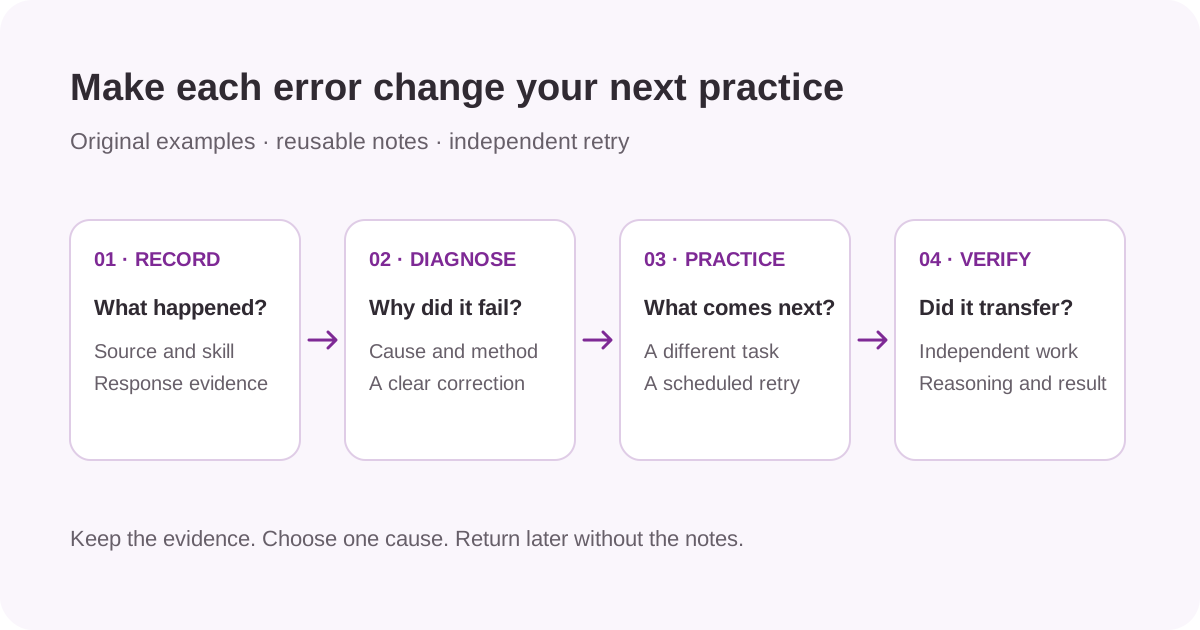
Choose a cause only after inspecting your work. A wrong percentage denominator calls for identifying the reference amount, while an English boundary error calls for recognizing clause structure. Assigning another whole practice test to both would obscure the different needs. Write one correction in a sentence you could use during a new item, then choose a few unfamiliar examples that require that correction.
Timing can belong in a row, but it should be evidence, not an excuse. If you changed a supported Reading answer in a rush, record what triggered the change and how you will check evidence before revising. If you did not reach an item, distinguish it from an attempted mistake. Do not combine optional-section and core-section error counts into a made-up composite.
Five fictional ACT log entries
The entries below illustrate diagnoses, not actual ACT questions or official answer explanations. The optional Science and Writing rows are relevant only if those sections are in your preparation plan. Replace the observations with your own work and official practice references. Notice that each next assignment is smaller and more specific than “do more ACT practice.” The verification column describes evidence to collect later, rather than claiming the issue is already fixed.
| Skill/task | Observed problem | Cause | Correction | Next practice | Later verification |
|---|---|---|---|---|---|
| English: sentence boundary | Joined two complete sentences with only a comma. | Read for meaning but did not check clause structure. | Identify each independent clause before choosing punctuation. | Check four new sentence-boundary items. | Explain both clauses on a later item before answering. |
| Math: percentage change | Used the final amount as the denominator. | Confused the reference value with the comparison value. | Write change divided by the starting amount before calculating. | Solve three new increase/decrease examples. | Solve one later example without a formula prompt. |
| Reading: supported inference | Picked a plausible claim with no passage support. | Used background knowledge instead of textual evidence. | Name the sentence or passage detail that licenses the inference. | Compare two distractors against a short passage. | Cite support for a later unseen inference. |
| Optional Science: graph comparison | Compared values from different experimental conditions. | Skipped axis labels and the legend. | Match condition, units and independent variable before comparing. | Read two unfamiliar graphs and describe their conditions. | Check an unseen graph pair with units stated aloud. |
| Optional Writing: argument development | Listed a viewpoint without explaining its implications. | Treated an assertion as a developed reason. | Add a reason, concrete example and explanation of relevance. | Revise one paragraph against the official writing criteria. | Review a new paragraph with a teacher or rubric. |
Run a weekly review
At the end of a study week, group English rows by rule, Math rows by setup, Reading rows by evidence decision, and optional Science rows by data relationship. Choose one recurring cause in the core sections first. Explain its correction without opening the old answer, complete a short new set and return later to another unfamiliar example. For Writing, compare a new response with the relevant criteria instead of counting answer accuracy. Retain a row when your verification is uncertain. A weekly review is a practical planning routine, not a scientifically established optimum or a promise of score improvement.
Official resources and the next step
Check current format details with ACT exam sections and structure. Use the other official sources listed with this guide for legitimate practice and criteria. Access conditions may vary, and some preparation products require payment or an account. This independent guide is not endorsed by the exam owner.
Start with the ACT error log template. Fill one row from your own attempt, choose one concrete correction and schedule a fresh verification. Keep personal identifiers and complete copyrighted questions out of shared copies. Your log should make the next learning decision clearer, not promise an outcome.
Sources and methodology
AI-assisted original English editorial draft prepared in Codex on 2026-10-05. Official exam-provider pages were checked for current format and preparation guidance. The examples are fictional original learning scenarios, not copied test questions or official scored responses. The weekly review loop is a practical editorial suggestion, not a claim that a particular cadence is optimal. This guide offers no score, passing, scholarship or admissions guarantee. Human editorial review was approved by Maksim Mamchur on 2026-10-05.


